Usually migrates cleanly
- Item master and customer/supplier records
- Opening stock quantities and values
- Open receivables and payables
- Historical sales and purchase documents, if the source export is consistent
How we work
No two projects are identical, but the shape is predictable: four to six weeks for a standard wholesale rollout, longer when production or custom development is involved. Here is the sequence we hold ourselves to.
| Stage | What happens | Your involvement |
|---|---|---|
| Week 0 — Diagnosis | We walk your current flow: how an order is taken, how stock is received and issued, which reports management trusts. We look at your item master and a month of documents. | Two to three hours, plus a data export |
| Week 1 — Scope | Product and module selection, migration scope, timeline and a fixed quotation. Anything out of scope is listed explicitly rather than discovered later. | One review meeting |
| Week 2–3 — Build | System configuration, item-master cleanup, trial data migration, and setup of the specific rules your business needs (dye lots, units, price lists). | Answer questions on exceptions |
| Week 4 — Parallel run | Your team enters real documents alongside the old method. We compare outputs and fix gaps before the old system is switched off. | Day-to-day use by the team |
| Week 5 — Go-live | Cut-over, opening balances, final checks. Support is on call for the first days of live operation. | Management sign-off |
| Week 6 onward — Support | Issue handling, refresher training for new staff, and upgrades as the business changes. | One named contact on your side |
Data migration
Migration is a standard part of the project, not an extra. We run a trial migration and reconcile the totals before anything is switched over.
We would rather tell you this at the quoting stage than during go-live week.
Training
Training is role-based, not a single demo for everyone. A salesperson needs order entry, price lookup and stock availability. A warehouse clerk needs receipt, issue and count. Finance needs the reconciliation view. Teaching all four the same screen is how projects fail quietly.
We leave behind short written procedures in Chinese or English, and we train new staff when people change roles — not only during the original project.
If your team still keeps a parallel spreadsheet after go-live, the implementation is not finished.
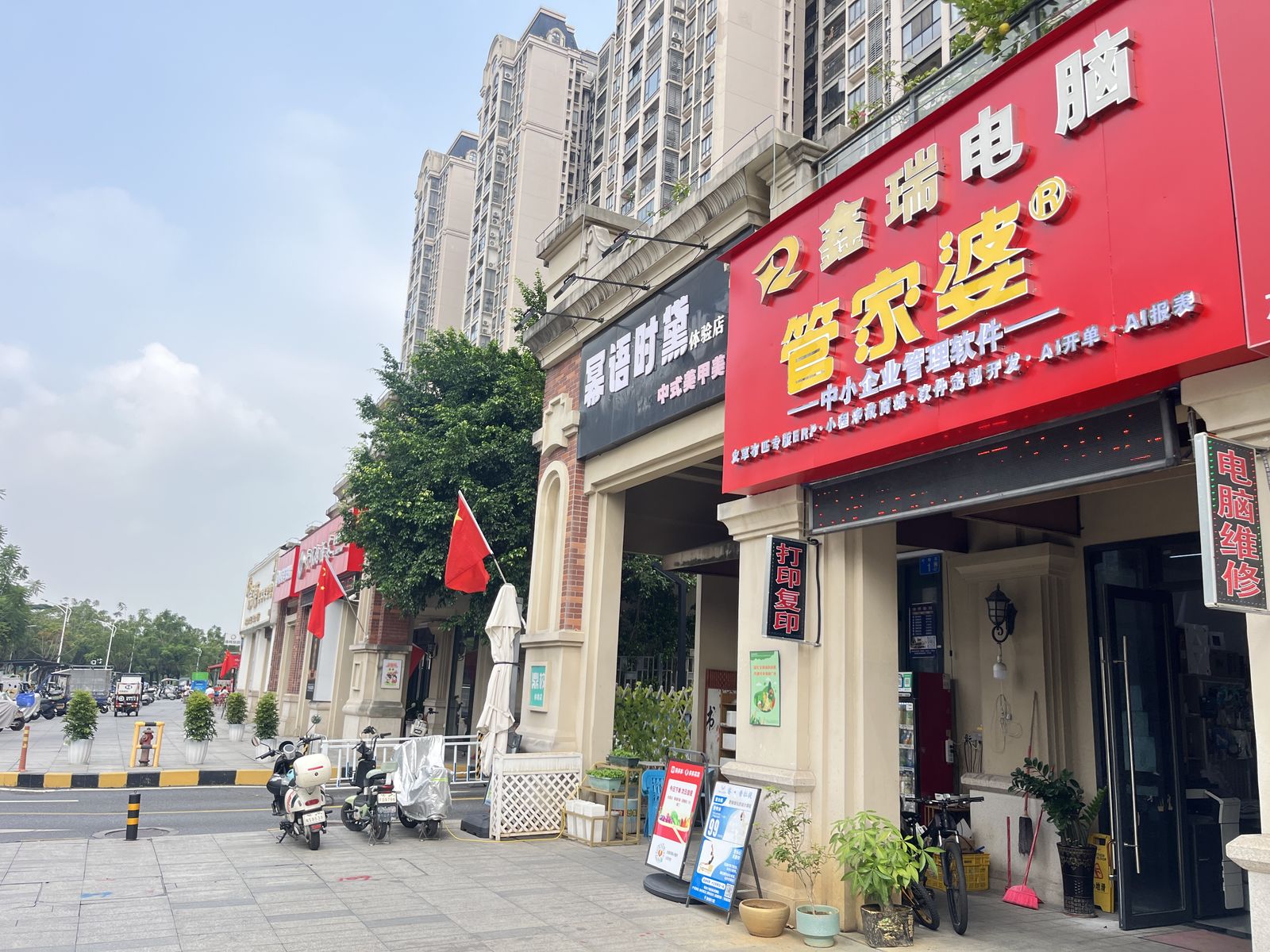
Our service point in Huadu — walk in with your data if that is easier than a call.
Straight answers
You will not find a wall of logos here. If you want to speak to a reference in your segment, we will ask a client whether they are willing — and respect the answer.
A large share of "we need a custom module" requests are configuration. We will show you the standard route first, because it is cheaper to buy and cheaper to maintain.
Clean item data, a named owner on your side and a realistic cut-over date matter as much as the product. We will say so before you sign.
Tell us what you sell, how many locations you run and where the current process hurts. We will tell you what a realistic first phase looks like.